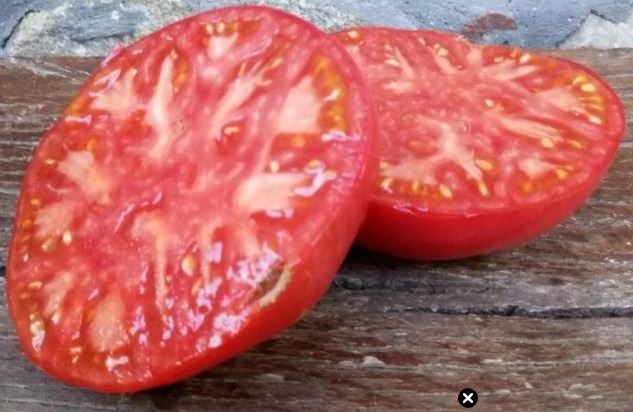
Characterization Descriptors for the “Galapagos” Heirloom Tomato
Asociación Simientes Infinitas
We safeguard, preserve, and propagate a collection of 1,700 traditional, heritage, or heirloom tomato varieties, making them available to everyone. We work to prevent genetic erosion.
History and Origin of the Variety
Historical Origin
Galapagos is an extraordinary wild variety native to the legendary Galápagos Islands, scientifically known as Solanum cheesmaniae. This spectacular variety represents one of the most valuable genetic treasures in the tomato world, having evolved over millennia in isolation under the extreme volcanic conditions of the Ecuadorian archipelago that also inspired Charles Darwin’s theories of evolution.
The fascinating history of this variety began thousands of years ago, when tomato ancestors reached the islands and gradually adapted to the unique conditions of the volcanic environment. Over generations, it developed exceptional characteristics that enabled it to survive in saline soils, arid conditions, and nutrient-poor volcanic terrain, becoming a true marvel of natural adaptation.
This wild variety has attracted the attention of the international scientific community for its exceptional resistance to diseases, pests, and extreme environmental conditions. Its resilience has led to its use in breeding programs to develop more resistant hybrid varieties, and it is known as a favorite food of the famous Galápagos giant tortoises.
In the 1950s, Zouzou Caray discovered the ancestors of the yellow-orange variety we know today, beginning a chain of conservation efforts involving researchers such as Dr. Robert Bowman of San Francisco State College and subsequent study at UC Davis, ensuring the preservation of this unique genetic heritage.
Interesting Facts About the Variety
Ancient genetic heritage: Natural evolution over millennia in volcanic isolation.
Tortoise food: A favorite of the iconic Galápagos giant tortoises.
Extreme resilience: Tolerates salt, drought, and poor soils exceptionally well.
A born survivor: Often the first to ripen and the last to succumb to the cold.
Evolutionary heritage: Studied by Charles Darwin during his expeditions.
Collected by Sarah Darwin: Charles Darwin’s great-granddaughter.
Scientific use: Used in saline aquaponics research.
Disease resistance: Resistant to Alternaria and tomato yellow leaf curl virus.
High nutritional content: Rich in sugars and beta-carotene.
Extraordinary productivity: Abundant fruit clusters throughout the season.
Cultural Significance
Galapagos transcends its horticultural value to become a living symbol of evolution and natural adaptation. This variety represents a direct link to the evolutionary processes that fascinated Darwin and continue to inspire modern scientists in their search for solutions for the agriculture of the future.
Its impact on scientific research has been revolutionary, serving as a model for understanding natural resistance mechanisms and as a genetic resource for developing more resilient commercial varieties. The variety demonstrates that nature, through evolution, can create extraordinary solutions to extreme environmental challenges.
- PLANT DESCRIPTORS
- FRUIT DESCRIPTORS
- AGRONOMIC CHARACTERISTICS
- RESISTANCE AND TOLERANCE
SPECIAL CHARACTERISTICS OF THE “GALAPAGOS” VARIETY
Outstanding Attributes:
Legendary resilience: Exceptional tolerance to fungi, pests, salt, drought, and extreme conditions.
Intensely sweet flavor: Pronounced sweetness that dominates over acidity, with spicy and fragrant notes.
Extraordinary productivity: Exceptional yields with continuous production until very late in the season.
Evolutionary heritage: A wild variety with thousands of years of natural evolution under volcanic conditions.
Culinary versatility: Ideal for cocktails, salads, and fresh eating thanks to its crisp texture.
Scientific value: Used in breeding programs to transfer natural resistance traits.
Recommended Uses:
Cocktails and appetizers: Perfect for eating fresh and for elegant presentations.
Gourmet salads: Adds color, sweetness, and a uniquely crisp texture.
Genetic conservation: Essential for preserving diversity and natural resistance traits.
Research and breeding: A valuable source of resistance genes for new varieties.
A wild variety (Solanum cheesmaniae) native to the Galápagos Islands. Naturally evolved over millennia. A genetic treasure of incalculable value to the world.