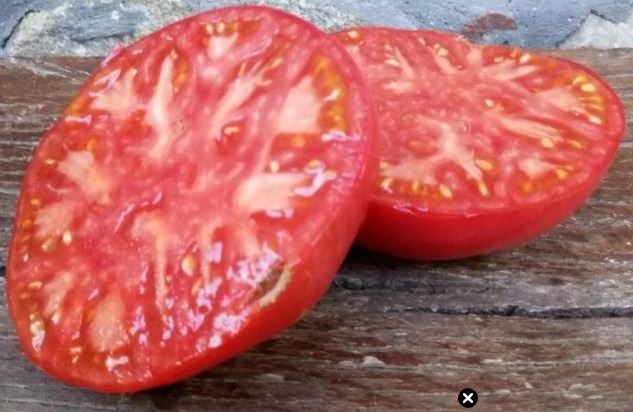


Technical descriptors
Plant descriptors
Characteristic — Assessment
Growth type: Indeterminate
Growth habit: Vigorous, upright cordon
Plant height: Tall (180–240 cm)
Plant vigour: High
Young stem colour: Green
Stem pubescence: Present
Hair density: Medium
Leaf type: Regular leaf
Leaf colour: Medium green
Leaflet shape: Standard
Leaflet margin: Toothed
Leaf pubescence: Light
Foliage density: Medium
Fruit descriptors
Characteristic — Assessment
Fruit shape: Flattened beefsteak, slightly ribbed
Fruit weight: Very large (300–900 g)
Fruit diameter: Very large (9–13 cm)
Unripe fruit colour: Pale green
Ripe fruit colour: Creamy white-yellow to ivory
Colour intensity: Pale, creamy
Colour uniformity: Uniform
Green shoulders: Absent or very faint
Shoulder shape: Rounded to slightly curved
Surface texture: Smooth
Ribbing: Slight to moderate at the shoulders
Fruit glossiness: Semi-matt
Calyx scar: Medium
Blossom-end scar: Small to medium
Number of locules: 4–6 (multilocular)
Locule arrangement: Regular
Wall thickness: Thick (8–12 mm)
Flesh firmness: Very firm and dense
Flesh colour: Ivory to pale cream
Juice content: Low to moderate
Seed quantity: Few (20–35)
Agronomic characteristics
Characteristic — Assessment
Days to flowering: Mid to late (70–80)
Days to harvest: Late (85–90 days from transplanting)
Yield per plant: High (4–7 kg)
Number of fruits per plant: Medium to low (10–18 fruits)
Harvest pattern: Staggered, during the second half of the growing season
Heat tolerance: Good
Cold tolerance: Moderate
Adaptation to low light: Good
Recommended spacing: 75–90 cm between plants
Fruits per truss: 2–3
Resistance and tolerance
Characteristic — Assessment
Early blight (Alternaria solani): Susceptible
Fusarium wilt (Fusarium oxysporum): Susceptible
Verticillium wilt (Verticillium dahliae): Susceptible
Late blight (Phytophthora infestans): Susceptible
Powdery mildew (Leveillula taurica): Moderately susceptible
Bacterial wilt (Ralstonia solanacearum): Susceptible
Bacterial speck (Pseudomonas syringae): Susceptible
Tomato mosaic virus (ToMV): Moderately susceptible
Tomato yellow leaf curl virus (TYLCV): Susceptible
Whitefly (Bemisia tabaci): Susceptible
Thrips (Thrips tabaci): Susceptible
Aphids: Susceptible
Fruit cracking: Moderately resistant
Blossom-end rot: Susceptible under water stress
Special characteristics
Notable attributes
Unique colour: A pale, creamy-yellow tomato with an extremely rare and distinctive appearance
Giant beefsteak: Fruits weighing 300–900 g, with record specimens exceeding 1 kg
Exceptional texture: Dense, firm, meaty, ivory-coloured flesh
Balanced flavour: Mild sweetness with minimal acidity and a delicate, refined flavour profile
Amish heritage: Preserved for generations in Virginia
Spectacular presentation: Ideal for impressive, oversized slices in gourmet dishes
Low gel content: Few seeds and small seed cavities, maximising the usable flesh
Recommended uses
Gourmet fresh eating: Its primary use, providing spectacular slices for salads
Culinary presentations: Exceptional colour and size for fine-dining dishes
Premium sandwiches: Thick, firm slices that do not release excess liquid
Caprese salads: A unique visual contrast when paired with red varieties
Speciality markets: Highly valued by chefs and gourmet consumers
Tastings: A showcase variety thanks to its extraordinary colour and size
Origin: Developed by Amish communities in Virginia’s Shenandoah Valley. Formally introduced in the 2007 Seed Savers Exchange Yearbook by William Blevins of Manassas, Virginia.