

Characterization Descriptors for the “Captain Lucky” Heirloom Tomato
Asociación Simientes Infinitas
We safeguard, preserve, and propagate a collection of 1,700 traditional, heritage, or heirloom tomato varieties, making them available to everyone. We work to prevent genetic erosion.
History and Origin of the Variety
Historical Origin
Captain Lucky is an extraordinary contemporary variety developed by Millard Murdock in East Flat Rock, North Carolina. This spectacular variety arose from an accidental cross between Lucky Cross and an unknown variety, representing one of the most fascinating examples of how chance discoveries can lead to exceptional varieties in the world of tomato breeding.
The fascinating history of Captain Lucky began with an unexpected discovery in Millard Murdock’s garden. After identifying this unique combination of characteristics, he devoted several generations of meticulous selection to stabilizing this wonderful new line. His patient, systematic work successfully fixed the distinctive traits that make this variety a true gem among bicolor tomatoes.
The stabilization process involved multiple generations during which Murdock identified and preserved the most desirable characteristics of the original cross. The variety developed its distinctive green, yellow, and pink tricolor appearance and exceptionally balanced flavor, becoming one of the bicolor varieties most highly prized by collectors and food enthusiasts.
The variety made its first official appearance in the 2011 Seed Savers Exchange Yearbook, co-listed by Susan Anderson, marking its formal introduction to the seed-saving community. Since then, it has quickly gained recognition among heirloom tomato enthusiasts for its psychedelic appearance and exceptional flavor.
Interesting Facts About the Variety
Chance origin: The result of an accidental cross discovered by Millard Murdock.
Unique tricolor appearance: An exceptional combination of green, yellow, and pink in the same fruit.
Potato leaf: A variety with distinctive potato-leaf foliage.
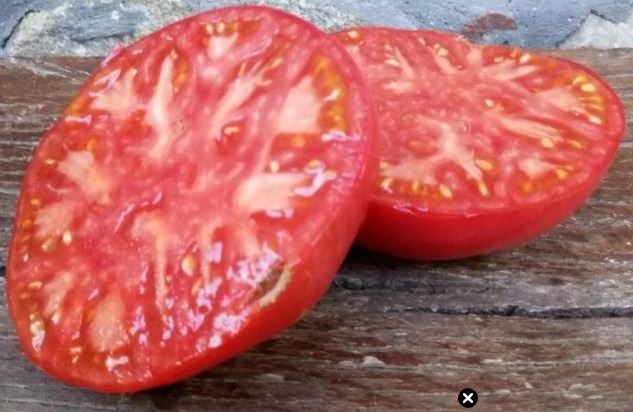
Psychedelic interior: Marbled flesh with spectacular shades of green, yellow, and pink.
Complex flavor: A perfect balance of acidity and sweetness with fruity notes.
Silky texture: Dense flesh with a smooth mouthfeel.
High productivity: Approximately five fruits per cluster.
Natural resilience: Good tolerance to diseases and adverse conditions.
Official debut: First appeared in Seed Savers Exchange in 2011.
Culinary versatility: Excellent both fresh and processed.
Cultural Significance
Captain Lucky transcends its horticultural value to become a symbol of how careful observation and dedication can transform accidental discoveries into genetic treasures. This variety embodies the essence of artisanal plant breeding, where patience and the experienced eye of independent breeders such as Millard Murdock can produce varieties that rival the finest deliberately planned creations.
Its impact on the tomato-growing community has been notable, demonstrating that some of the best varieties can arise from serendipity combined with expert knowledge. The variety has inspired other breeders to pay attention to spontaneous crosses and recognize the importance of continuous observation in their gardens.
- PLANT DESCRIPTORS
| Characteristic | Assessment for “Captain Lucky” |
|---|---|
| Growth type | Indeterminate |
| Growth habit | Upright and robust |
| Plant height | Tall (150–180 cm) |
| Plant vigor | High |
| Young stem color | Green |
| Stem pubescence | Present |
| Hair density | Medium |
| Leaf type | Potato leaf |
| Leaf color | Dark green |
| Leaflet shape | Broad and rounded |
| Leaflet margin | Entire |
| Leaf pubescence | Slightly present |
- FRUIT DESCRIPTORS
| Characteristic | Assessment for “Captain Lucky” |
|---|---|
| Fruit shape | Flattened (beefsteak type) |
| Fruit weight | Large (200–450 g) |
| Fruit diameter | Large (8–12 cm) |
| Unripe fruit color | Green |
| Ripe fruit color | Green with a pink-red base |
| Color intensity | Intense |
| Color uniformity | Bicolor with gradual transitions |
| Green shoulders | Deep green shoulders |
| Shoulder shape | Broad and pronounced |
| Surface smoothness | Smooth to slightly ribbed |
| Ribbing | Slight |
| Fruit glossiness | Matte to semi-glossy |
| Calyx scar | Large |
| Blossom-end scar | Medium |
| Number of locules | 4–6 (multilocular) |
| Locule distribution | Regular |
| Wall thickness | Thick (8–10 mm) |
| Flesh firmness | Firm and dense |
| Flesh color | Marbled green, yellow, and pink |
| Juice content | Very juicy |
| Seed count | Moderate (25–40) |
- AGRONOMIC CHARACTERISTICS
| Characteristic | Assessment for “Captain Lucky” |
|---|---|
| Days to flowering | Mid-season (65–70 days) |
| Days to harvest | Mid-to-late season (80–85 days from transplanting) |
| Yield per plant | High (6–8 kg) |
| Number of fruits per plant | Medium to high (15–25) |
| Harvest pattern | Staggered (July–October) |
| Heat tolerance | Good |
| Cold tolerance | Moderate |
| Adaptation to low light | Fair |
| Recommended spacing | 75–90 cm between plants |
- RESISTANCE AND TOLERANCE
| Characteristic | Assessment for “Captain Lucky” |
|---|---|
| Alternaria (Alternaria solani) | Moderately resistant |
| Fusarium (Fusarium oxysporum) | Resistant |
| Verticillium (Verticillium dahliae) | Moderately resistant |
| Late blight (Phytophthora infestans) | Moderately susceptible |
| Powdery mildew (Leveillula taurica) | Moderately resistant |
| Bacterial wilt (Ralstonia solanacearum) | Susceptible |
| Bacterial speck (Pseudomonas syringae) | Susceptible |
| Tomato mosaic virus (ToMV) | Moderately resistant |
| Tomato yellow leaf curl virus (TYLCV) | Moderately resistant |
| Whitefly (Bemisia tabaci) | Susceptible |
| Thrips (Thrips tabaci) | Susceptible |
| Aphids | Susceptible |
| Cracking | Resistant |
SPECIAL CHARACTERISTICS OF THE “CAPTAIN LUCKY” VARIETY
Outstanding Attributes:
Psychedelic appearance: Green-and-pink bicolor fruits with an interior marbled in spectacular shades of green, yellow, and pink.
Exceptional flavor: A perfect balance of acidity and sweetness, with complex fruity notes and a silky texture.
Potato-leaf variety: Distinctive potato-leaf foliage that makes it easily identifiable.
Fascinating origin: The result of an accidental cross stabilized by breeder Millard Murdock.
Culinary versatility: Excellent for fresh eating, garnishing, slicing, and gourmet presentations.
Consistent productivity: A reliable variety that rarely disappoints in yield or quality.
Recommended Uses:
Gourmet cuisine: Ideal for special presentations thanks to its unique appearance and complex flavor.
Slicing and sandwiches: Perfect for fresh use thanks to its firm texture and balanced flavor.
Decorative garnishes: Excellent for decorating dishes with its spectacular coloring.
Preserves and sauces: Well suited to processing while retaining its distinctive flavor.
Developed by Millard Murdock (North Carolina). Accidental cross: Lucky Cross × unknown variety. Official debut in Seed Savers Exchange in 2011.