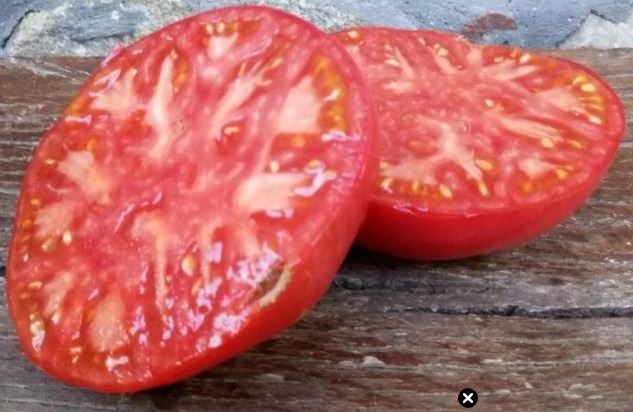
Characterization Descriptors of the "Gregory Altaï" Heirloom Tomato
Simientes Infinitas Association
We safeguard, preserve, and reproduce a collection of 1,700 heirloom tomato varieties for the public. We work to prevent genetic erosion.
History and Origin of the Variety
Historical origin
Gregory Altaï is an extraordinary Siberian heirloom variety that represents one of the most hardy and adaptable beefsteak tomatoes in the world's cold regions. This historic variety originated in the Altaï Mountains in the Novosibirsk region of Siberia, specifically on the border between Russia and China, an area known for its extreme weather conditions and vast mountain landscapes.
The fascinating history of Gregory Altaï is intertwined with international cultural exchanges in the late 20th century. In 1989, Bill McDorman of Seeds Trust participated in a pioneering horticultural expedition to Siberia along with Earth Stewards from Eugene, Oregon. This historic "Great Siberian Adventure" aimed to discover traditional varieties that could bring resistance and adaptability to Western crops.
During this expedition, McDorman collected seeds from numerous traditional Siberian varieties that were completely unknown in the United States. Gregory Altaï was one of these botanical gems that helped fuel growing American interest in heirloom varieties. This variety immediately stood out for its extraordinary adaptability to both short-season cold climates and intense heat conditions.
Traditional farmers in the Altaï Mountains developed this variety over generations, selecting plants that could thrive in Siberia's extreme continental climate, characterized by brutally cold winters and short but intense summers. The result was an exceptionally hardy tomato with beefsteak characteristics, a rare combination that made it a highly valued variety.
Variety Fun Facts
Historic expedition: Introduced to the West in 1989 during Seeds Trust's historic expedition to Siberia
Extreme hardiness: Developed to withstand the harshest weather conditions in central Siberia
International award: Award winner from Organic Gardening Magazine for its exceptional quality
Dual adaptability: The only variety that thrives in both short-season cold climates and extreme heat conditions.
Mountain heritage: Native to the legendary Altaï Mountains, a natural border between multiple civilizations
Relic precursor: One of the first Siberian varieties to popularize the heirloom movement in America
Unique texture: Famous for its flesh being so dense and firm that it can be sliced into paper-thin sheets.
Nomadic heritage: Traditionally grown by the semi-nomadic pastoral communities of the region
Genetic reserve: Considered a genetic treasure for developing climate-resistant varieties
Cultural Importance
Gregory Altaï transcends its horticultural value to become a symbol of the extraordinary resilience and adaptability that plants can achieve when selected over generations in extreme conditions. This variety represents the perfect harmony between the traditional wisdom of the Siberian peoples and modern needs for genetic diversity.
Its introduction to the West marked a milestone in heirloom variety conservation, demonstrating that the best solutions for contemporary agricultural challenges are often found in the ancestral traditions of remote regions. Gregory Altaï became an ambassador of Siberian genetic wealth and a catalyst for seed exchange between continents.
The region of origin, the Altaï Mountains, is considered one of the world's most important biodiversity hotspots and was declared a UNESCO World Heritage site as the "Golden Mountains of Altaï". This area represents the confluence of unique ecosystems where the Siberian taiga meets the Kazakh steppes and the Mongolian semi-deserts.
The variety has inspired a new generation of horticulturists and conservationists to seek out and preserve traditional varieties from climatically challenging regions, contributing significantly to the global movement for seed and agricultural diversity conservation.
1. PLANT DESCRIPTORS
| Characteristic |
Evaluation for "Gregory Altaï" |
| Growth type |
Indeterminate |
| Growth habit |
Erect and vigorous |
| Plant height |
Tall (180-220 cm) |
| Plant vigor |
Exceptional |
| Young stem color |
Green |
| Stem pubescence |
Present |
| Hair density |
Medium |
| Leaf type |
Regular (not potato type) |
| Leaf color |
Dark green |
| Leaflet shape |
Regular |
| Leaflet margin |
Serrated |
| Leaf pubescence |
Present |
3. FRUIT DESCRIPTORS
| Characteristic |
Evaluation for "Gregory Altaï" |
| Fruit shape |
Slightly flattened and ribbed |
| Fruit weight |
Large (200-500 g) |
| Fruit diameter |
Large (8-12 cm) |
| Unripe fruit color |
Green |
| Ripe fruit color |
Intense pink-purple |
| Color intensity |
Very intense |
| Color uniformity |
Uniform with slight variations |
| Presence of green shoulders |
Occasional |
| Shoulder shape |
Rounded with slight grooves |
| Surface smoothness |
Slightly wavy |
| Presence of ribs |
Slightly ribbed |
| Fruit gloss |
Glossy |
| Calyx scar |
Medium |
| Pistil scar |
Small |
| Number of locules |
6-8 (multilocular) |
| Locule distribution |
Regular |
| Wall thickness |
Very thick (8-10 mm) |
| Pulp firmness |
Extremely firm and dense |
| Pulp color |
Deep pink |
| Juiciness |
Juicy |
| Seed count |
Few (<25) |
6. AGRONOMIC CHARACTERISTICS
| Characteristic |
Rating for "Gregory Altaï" |
| Days to flowering |
Very early (50-60) |
| Days to harvest |
Early (67-80 days from sowing) |
| Yield per plant |
High (5-8 kg) |
| Number of fruits per plant |
Medium-high (10-20) |
| Harvest concentration |
Staggered (July-October) |
| Heat tolerance |
Excellent |
| Cold tolerance |
Exceptional |
| Low-light adaptation |
Good |
| Recommended spacing |
60-80 cm between plants |
7. RESISTANCES AND TOLERANCES
| Characteristic |
Rating for "Gregory Altaï" |
| Alternaria (Alternaria solani) |
Resistant |
| Fusarium (Fusarium oxysporum) |
Moderately resistant |
| Verticillium (Verticillium dahliae) |
Resistant |
| Late blight (Phytophthora infestans) |
Moderately susceptible |
| Powdery mildew (Leveillula taurica) |
Moderately resistant |
| Bacterial wilt (Ralstonia solanacearum) |
Moderately susceptible |
| Bacterial speck (Pseudomonas syringae) |
Susceptible |
| Tomato mosaic virus (ToMV) |
Moderately resistant |
| Tomato yellow leaf curl virus (TYLCV) |
Resistant |
| Whitefly (Bemisia tabaci) |
Moderately resistant |
| Thrips (Thrips tabaci) |
Susceptible |
| Aphids |
Susceptible |
| Cracking |
Very resistant |
SPECIAL CHARACTERISTICS OF THE "GREGORY ALTAÏ" VARIETY
Outstanding attributes:
• Exceptional sweet and balanced flavor: Perfect balance between sweetness and acidity with complex notes and intense aroma.
• Extraordinary earliness for steak tomatoes: One of the earliest large tomato varieties in the world
• Exceptional climate resistance: Extraordinary adaptation to both extreme cold climates and intense heat
• Unique Siberian heritage: Heirloom variety with over a century of selection in extreme conditions
• Ultra-firm flesh: Exceptionally dense pulp that allows paper-thin slices
• Climate versatility: Ideal for both short seasons and Mediterranean climates
• Exceptional productivity: High and consistent yield throughout the growing season
• Stress resistance: Exceptional tolerance to adverse conditions and sudden climate changes
Limitations:
• Support requirements: Requires sturdy staking due to its vigorous growth and heavy fruit
• Moderately susceptible to late blight: May require protection in high-humidity conditions
• Pruning management: Regular pruning is beneficial to optimize production and fruit size
• Specific spacing: Needs suitable planting frames for optimal development
• Frost sensitivity: Does not tolerate temperatures below 10°C
Recommended Uses:
• Gourmet salads: Excellent for salads where its balanced flavor and firm texture stand out.
• Paper-thin slices: Ideal for preparations requiring very thin slices due to its unique texture
• Short-season cuisine: Perfect for regions with short summers seeking quality tomatoes
• Premium preservation: Excellent for artisanal preserves due to its firmness and concentrated flavor
• Growing in extreme climates: Essential for gardens in regions with challenging climatic conditions
• Siberian variety collecting: Essential for cold-climate heirloom tomato collections
• Sustainable agriculture: Ideal for agricultural systems seeking resistant and adaptable varieties
• Resistance research: Valuable for studies on climate adaptation and genetic resistance
• Horticultural tourism: An attraction for agricultural experiences and education on Siberian biodiversity
• Specialized markets: For consumers who value heirloom varieties with unique characteristics
• High-mountain restoration: Valued by chefs seeking ingredients with history and distinctive flavor
• Conservation education: A model for teaching about the importance of preserving genetic diversity
Data based on Seeds Trust documentation, records from the 1989 Siberian expedition, information from Organic Gardening Magazine, studies on Siberian heirloom varieties, testimonials from traditional farmers in the Altai Mountains, and references on the climate adaptation of tomato varieties.